Murphy Street’s downhill cycle lane has become a predictable conflict point for cyclists and drivers alike. The Thorndon Residents’ Association has gathered evidence showing that the current layout does not meet the project’s “improved safety” objective and instead creates systemic risks for everyday users.
Why the Downhill Lane Is Unsafe
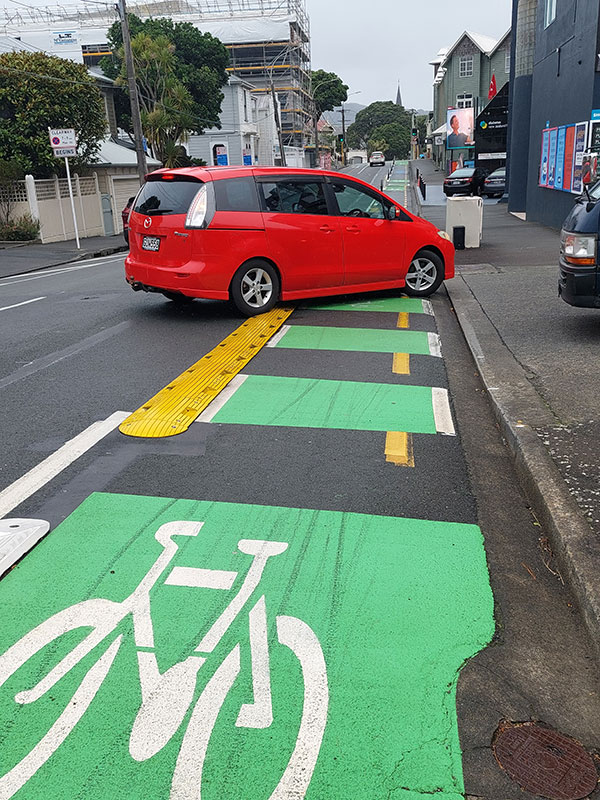
During the day, many cyclists avoid the downhill cycle lane because “drivers in the RH lane frequently turn across the downhill cycle lane and either don’t check for cyclists, or misjudge a cycle’s downhill / downwind pace.” Instead, riders often choose the main carriageway, where they have clearer escape options and are not channelled into a constrained conflict zone.
Physical Evidence of Near‑Misses
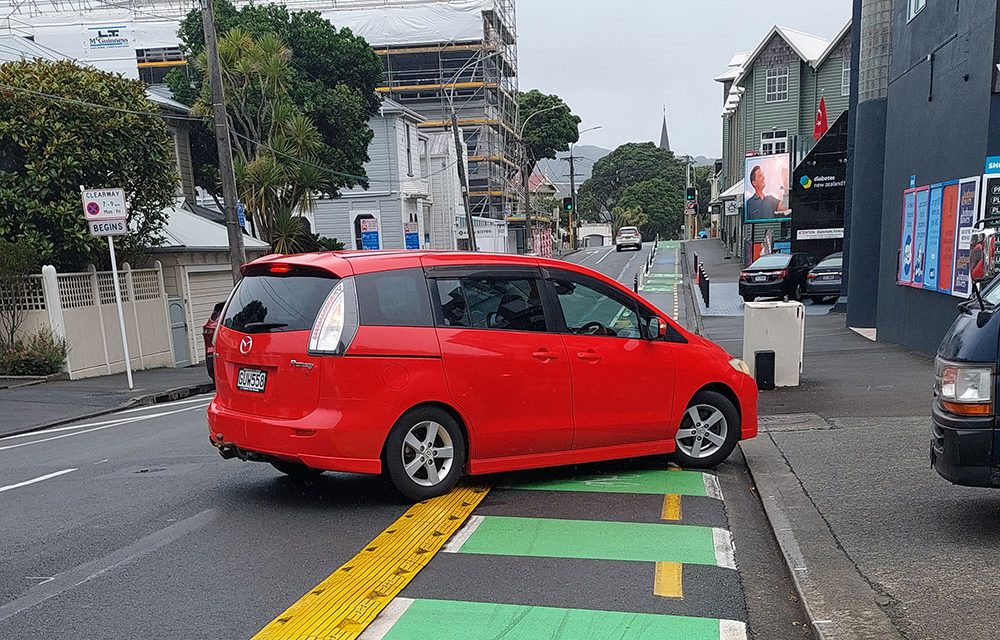
A striking pattern of dark tyre scuff marks is visible on the downhill lane surface. As noted in the evidence, “the concentration of dark tyre scuff marks clearly visible is consistent with repeated hard‑braking by cyclists.” Their location aligns with where:
- vehicles turn across the lane to enter the supermarket
- drivers exiting the driveway must nose out to gain visibility
- cyclists are travelling at higher downhill speeds with longer stopping distances
Transport‑safety practice recognises such markings as surrogate safety evidence—physical traces of frequent near‑misses even when crashes are not formally recorded.
A Layout That Is Not Self‑Enforcing
The tyre‑mark pattern shows that the design “provides no physical cues or protections that prevent conflict, so cyclists and drivers are left to manage risk through rapid reactions rather than safe geometry.” This results in repeated, systemic cyclist–vehicle conflict. A self‑enforcing layout guides people naturally into safe behaviour; Murphy Street does the opposite.
Why Some Cyclists Stay in the Roadway
Some riders report that the safest option during non‑peak hours is to remain in the left‑hand traffic lane. This avoids the conflict zone entirely and positions them better for the transition into Mulgrave Street, which becomes a shared road. However, some drivers do not understand why cyclists avoid the designated lane, which “indicates that other road users don’t appreciate that the cycle lane is a serious conflict zone for riders and drivers alike.”
Gaps in the Project’s Safety Assessment
The Council excluded the Thorndon New World entrances from the project’s Safety Audit, arguing that private driveways were out of scope. Yet these entrances are the busiest intersections on both Molesworth and Murphy Streets. The Association has previously raised related concerns, including a 2025 submission requesting sharrows during school‑zone 30 km/h periods—an idea officers declined as “out of scope.”
What This Evidence Shows
The tyre marks should be treated as material evidence of close calls and heavy braking. They reinforce the need for design changes that reduce or eliminate conflict movements and create a layout that is genuinely safe for all users
Feedback
The Association is keen to hear from anyone who walks, scoots, cycles or drives this route. If you’ve experienced this conflict zone, please share your observations with us at
It’s all downhill – Murphy Street
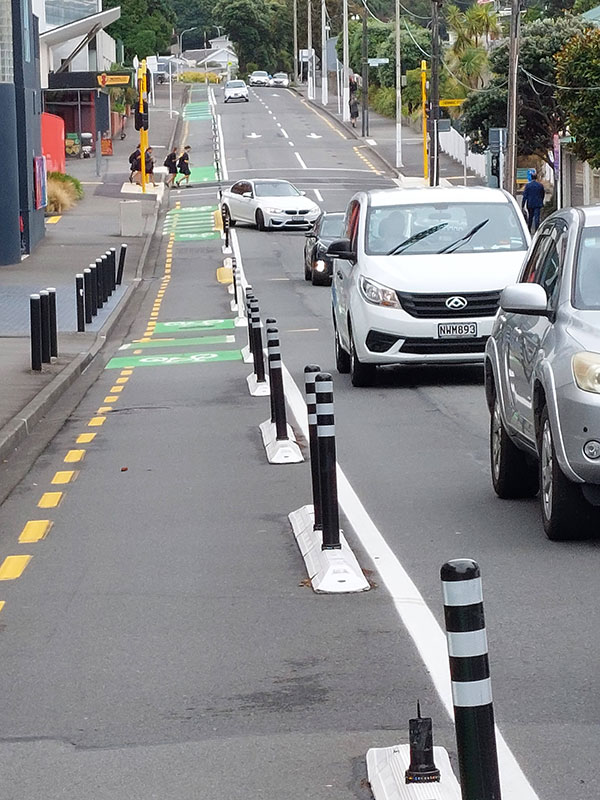
During the day the left side of the roadway is relatively clear and safe for cycling, because drivers in the RH lane frequently turn across the downhill cycle lane and either don’t check for cyclists, or misjudge a cycle’s downhill / downwind pace.
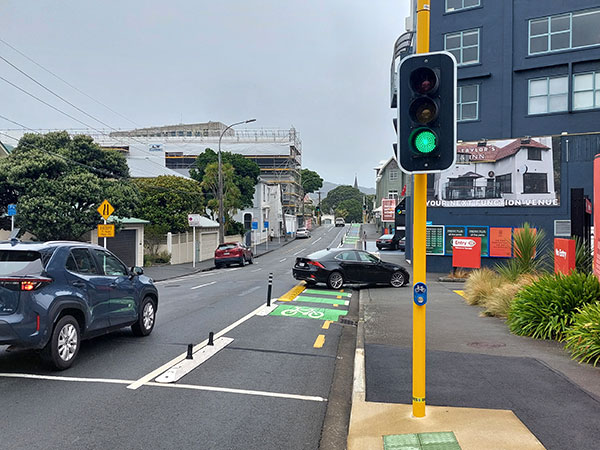
Some cyclists choose the vehicle carriage-way as the safer option to ride downhill. This avoids being channelled into this conflict zone with constrained exit options when drivers don’t see them, or mis-judge the pace of an approaching cycle down the ‘protected’ cycle lane.