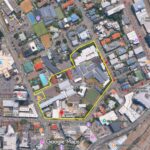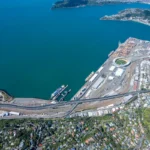
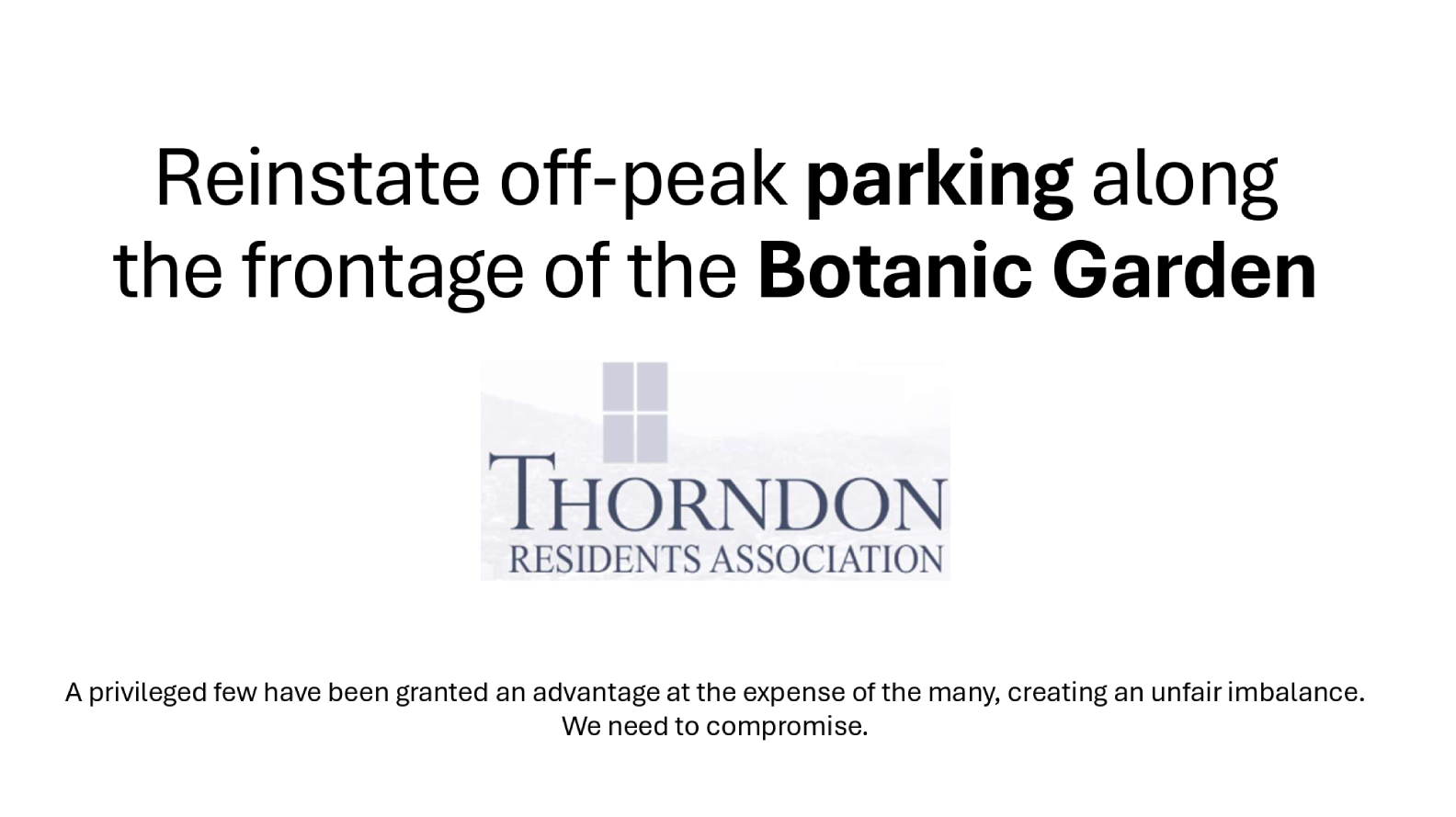
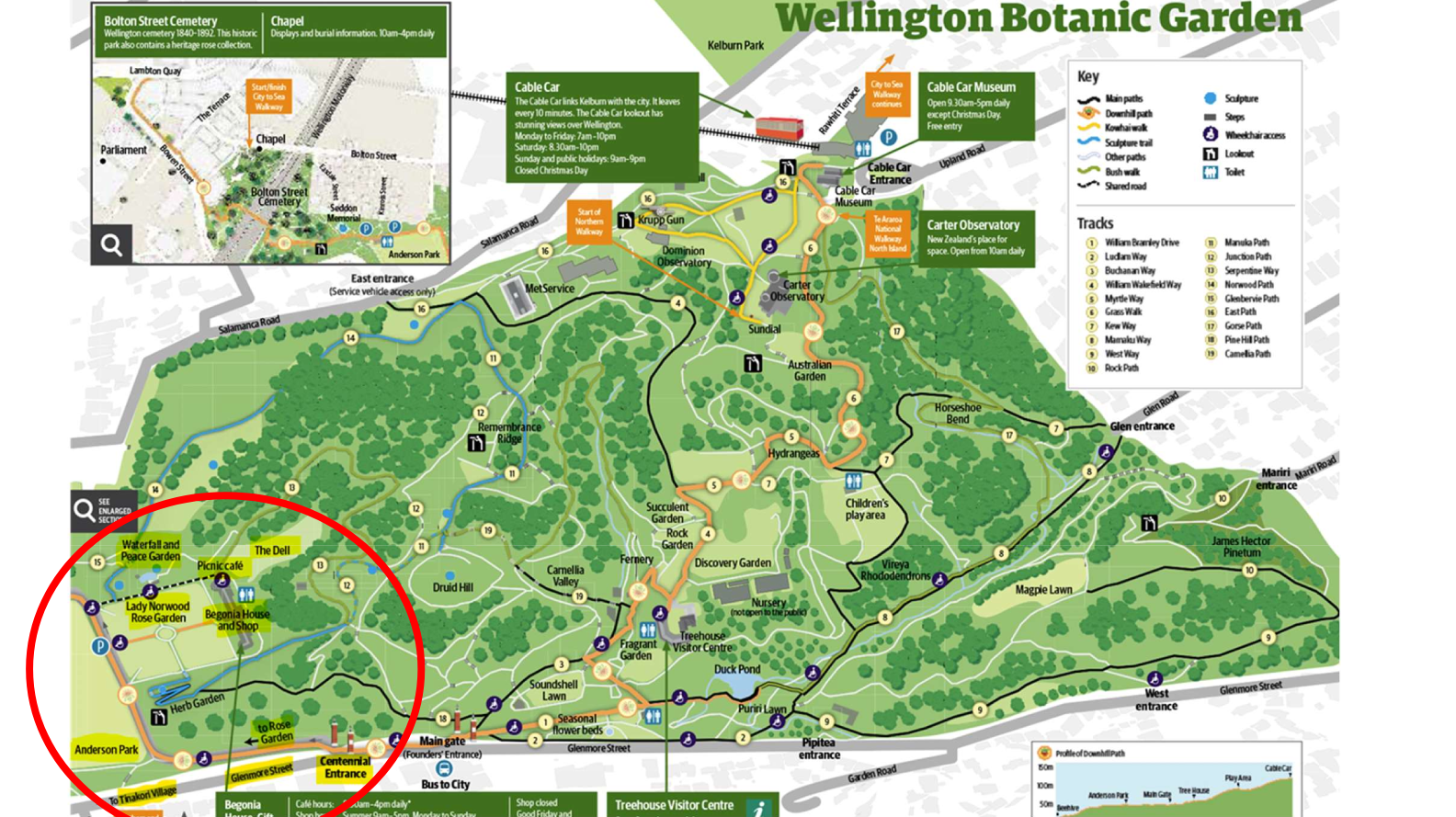
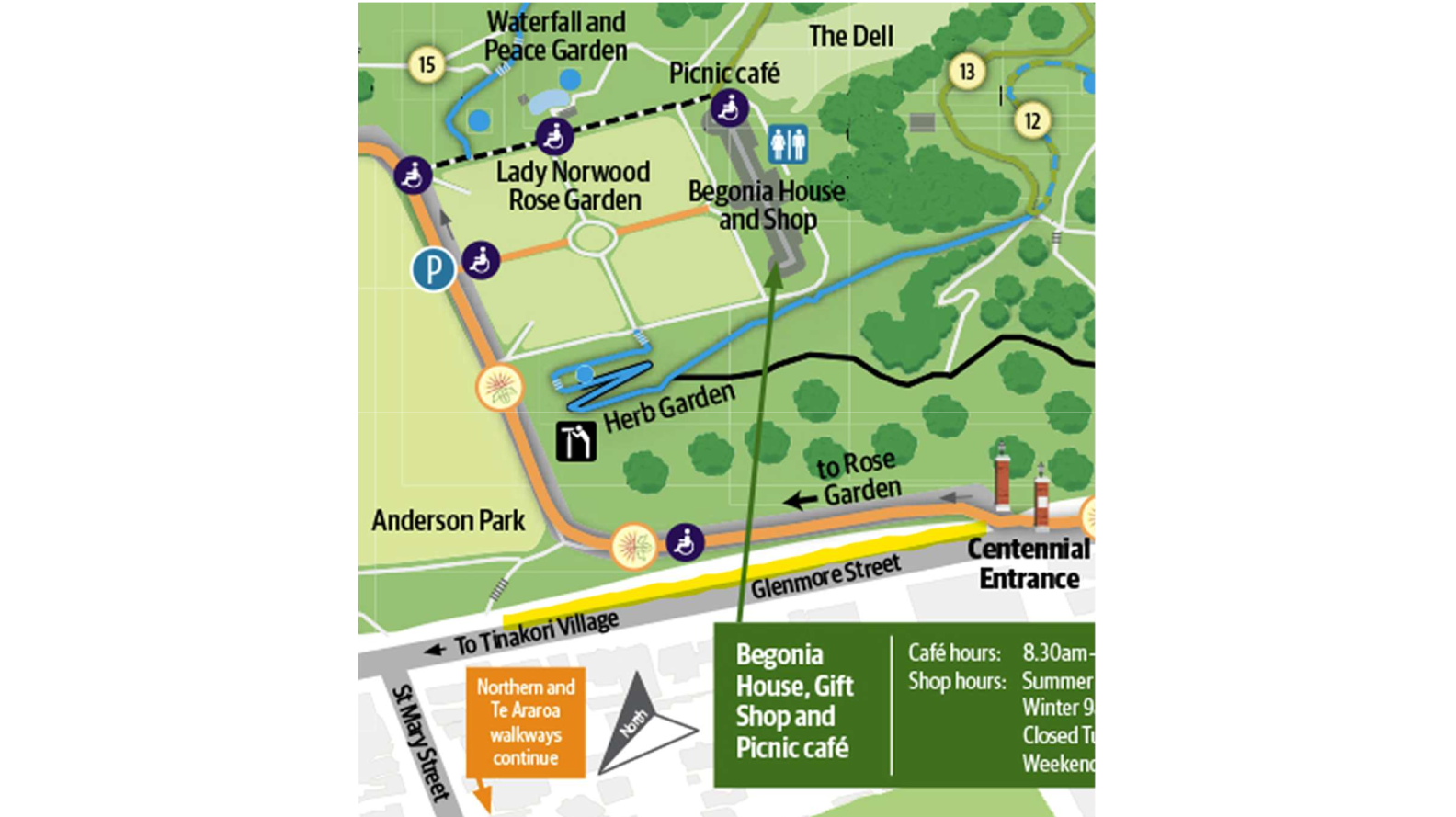
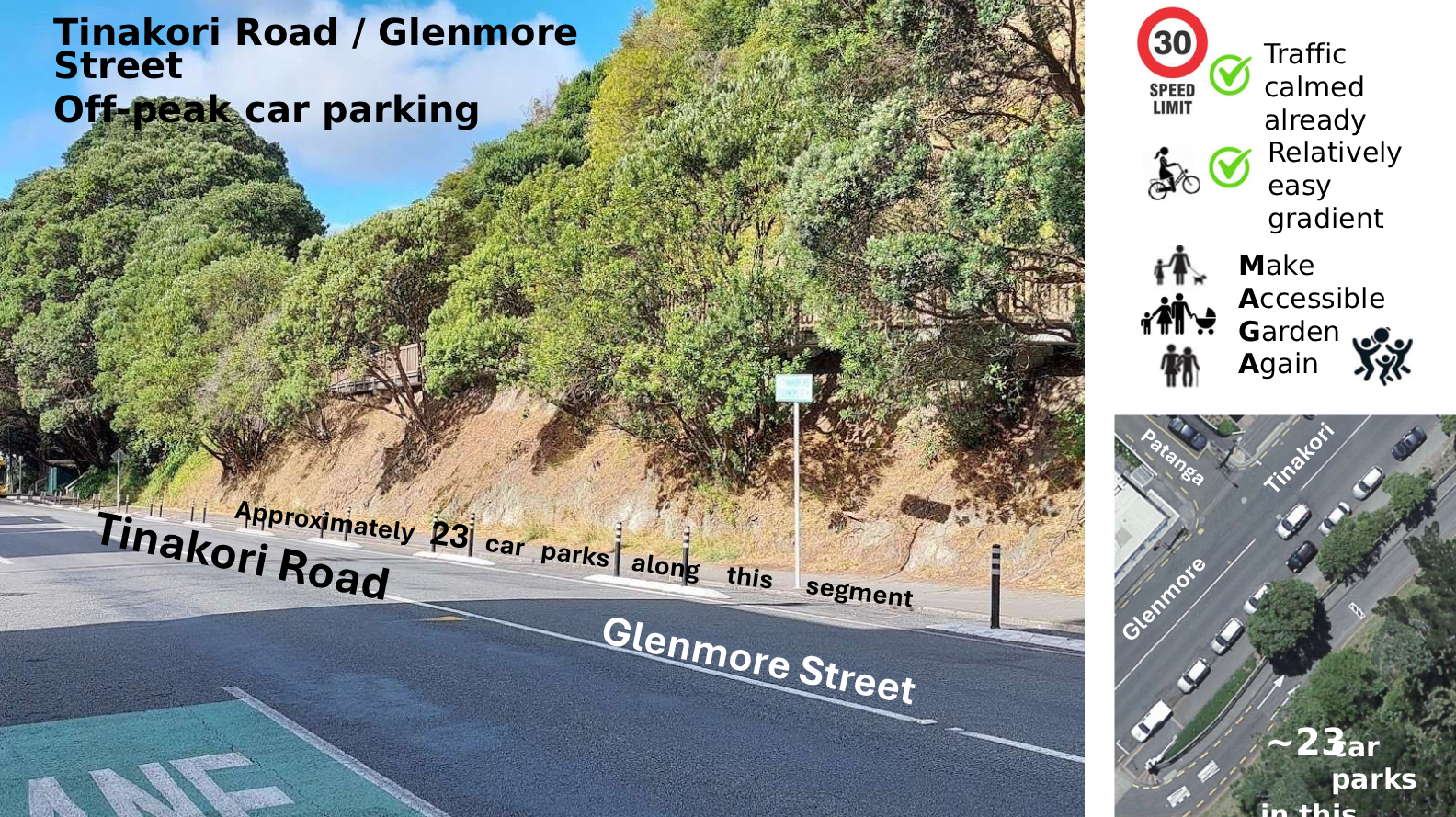
Representatives from the Thorndon Residents’ Association (TRA) recently met with the Mayor and Wellington City Council staff on Glenmore Street to discuss a long-standing concern: the lack of visitor parking outside the Wellington Botanic Garden.
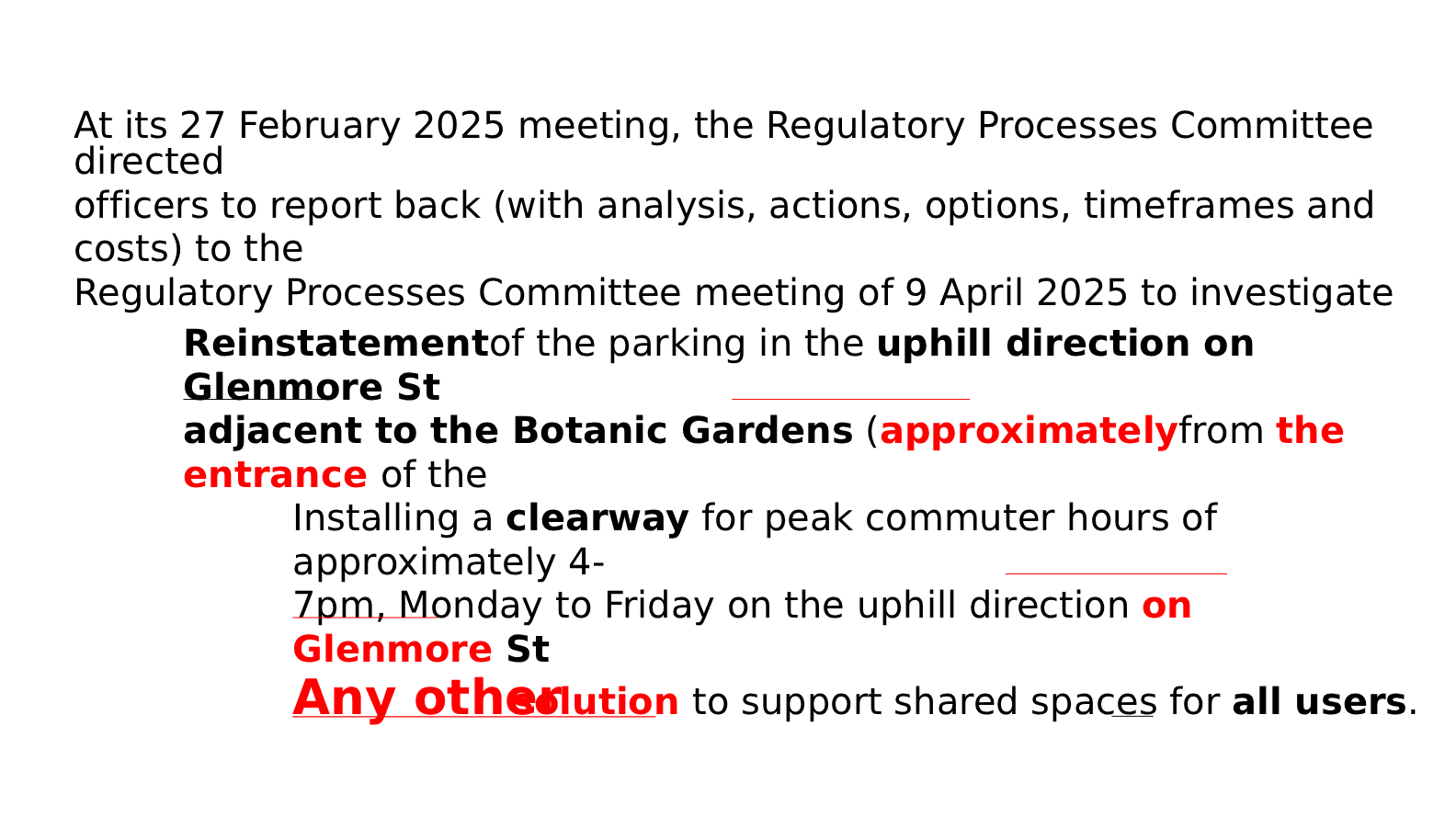
The Association asked the Mayor and Ward Councillors for the Wellington City Council to undertake a review and consider changes that would improve access while continuing to support safe cycling infrastructure.
A letter was received from the Mayor in mid-September, which advised the TRA to make another submission for a formal review as part of the Council developing its Long Term Plan (LTP) in 2027.
TRA Slideshow Presentation (including maps)
This opinion piece from when Councillors initially considered the need to compromise and balance things. It’s a summary, but also provides the link to the original item in The Spinoff, in 2025:
SUMMARY of The SPINOFF
Windbag; Why reviewing the Glenmore St cycleway isn’t such a bad idea
This article argues that reviewing the design of the cycleway along the entire frontage of the Botanic Garden is a reasonable step to maintain public support, gather proper data, and refine the design – without abandoning the goal of a connected, protected cycling network to Karori.
A summary of the key messages:
- Reviewing the Glenmore St cycleway is not a backward step. The author argues that while cycling advocates fear the review signals capitulation, “progress requires some flexibility” (quoted from the article). The review can be a legitimate part of maintaining public support.
- The core issue is “social licence.” Councillor Ben McNulty emphasises that major transport changes disrupt existing uses of streets, and the council must balance benefits for cyclists with impacts on others. Without social licence, the wider cycling network becomes politically fragile.
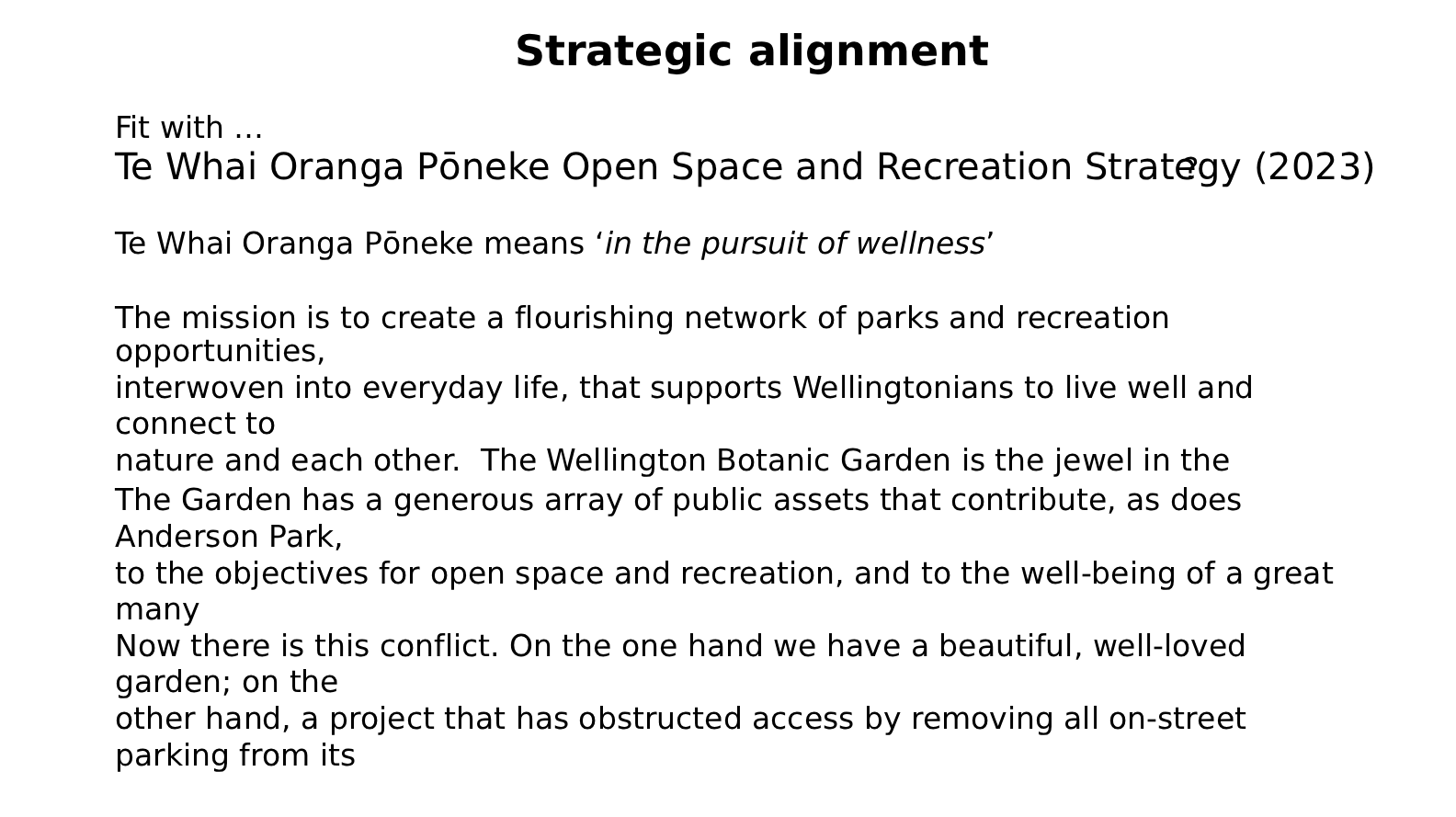
- The Glenmore St section has specific pain points. The complete loss of on‑street parking beside the Botanic Garden has generated many problems, and strong complaints. The article notes that access has genuinely become more difficult for many garden users.
- A weakness is the lack of reliable usage data. The council has not provided clear evidence of how many cyclists are using the route, turning debate into “a baseless reckons‑fest.” This undermines trust.
- A review does not have to mean removing the cycleway. Several alternative design tweaks could restore parking while keeping a protected route for when it’s most desirable:
- A part‑time clearway
- Routing a shared path (one-way) along the edge of the Botanic Garden
- Utilising the footpath appropriately (Mr Morgan’s suggestion)
- None are perfect, but all are about pragmatism and compromise.
- The broader cycling network depends on willingness to negotiate. Wellington’s tactical‑urbanism approach is designed to allow adjustments after installation. The author argues that “all sides need to be willing to meet each other halfway” if Wellington wants a world‑class cycling network.